What is Calciphylaxis ?
CALCIPHYAXIS
Calciphyaxis is a rare , painful and deadly disease that is most likely to be seen in people with moderate to severe kidney problems . When causes calcium deposits form in your blodd vessels and block blood flow to areas of your skin . This can lead to open wounds that are prone to dangerous infections .
Calciphyaxis disease causes calcium deposits to form in your blood vessels and block blood flow, leading to areas where skin and tissues just underneath break down and die . Calciphyaxis is a rare but serious disease, believed to affect 1-4 % of all dialysis patients . Calciphyaxis is one type of extraskeletal calcification . Extreskeletal calcifications are obsered in some people with high levels of calcium in the blood , including people with milk - alkali syndrome , sarcoidosis , primary hyperparathyroidism , and hypervitaminosis D .
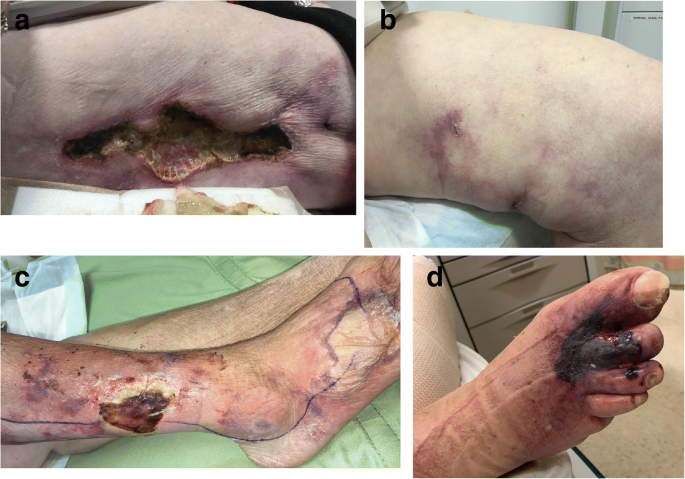
CALCIPHYAXIS PICTURES :

HOW TO TREAT CALCIPHYLAXIS ?
The treatments of calciphyaxis requires a multidisciplinary approach , using the knowledge of nephrologists , plastic surgeons , dermatologists , and wound care specialists working together to manage the disease and its outcomes. The key to treating calciphylaxix is prevention via rigorous control of phosphate and calcium balance and management of risk factors in patients who have increased chances of developing calciphylaxis . It generally accepted to apply a multi pronged approach to each patients .

ANALGESIA AND WOUND MANAGEMENT :
Pain management and choice of analgesia is a challenging task in managing calciphylaxis . pain is one of the most severe and pervasive symptoms of the disease and can be unresponsive to high - dose opioids . Care for calciphylaxis lesions involves using approprites dressings , wound debridement , and prevention of infection . Infection leads to sepsis , one of the leading causes of death in patients with calciphylaxis . There are some smaller retrospective studies that show the use of hyperbaric oxygen in improving delivery of oxygen to wounds , which improves blood flow and helps with wound healing .
RISK FACTOR MITIGATION :
Most patients with calciphylaxis are already on hemodialysis , or simply dialysis , but the length or frequency of sessions may be increased . The majority of dialysis patients are on 4 - hour three times per weeks schedule . A disease statte that causes low calcium and requires use of calcium supplementations and calcitriol, which should be avoid in patients with end stage kidney disease and calciphylaxis .
CAUSES OF CALCIPHYLAXIS :
The cause of calciphylaxis i sunknown . Calciphylaxis is not a hypersensitivity reaction leading to sudden local calcification . The disease is also known as calcific uremic arteriolopathy the disease is not limited to patients with kidney failure . The calcium has been deposited , event occur within the lumen of these vessels , resulting in occlusion of the vessels and subsequent tissues infarction . Another theory has been proposed that vitamin K deficiency due to dietary restrictions meant to limit potassium and sodium . Many end stage kidney disease patients are also on a medication called warfarin , a vitamin K antagonist , that limits vitamin k recycling in the body . Patients who require or have undergone any type of vasular procedures are also at increased risk for poor outcomes .
DIAGNOSIS FOR CALCIPHYLAXIS :
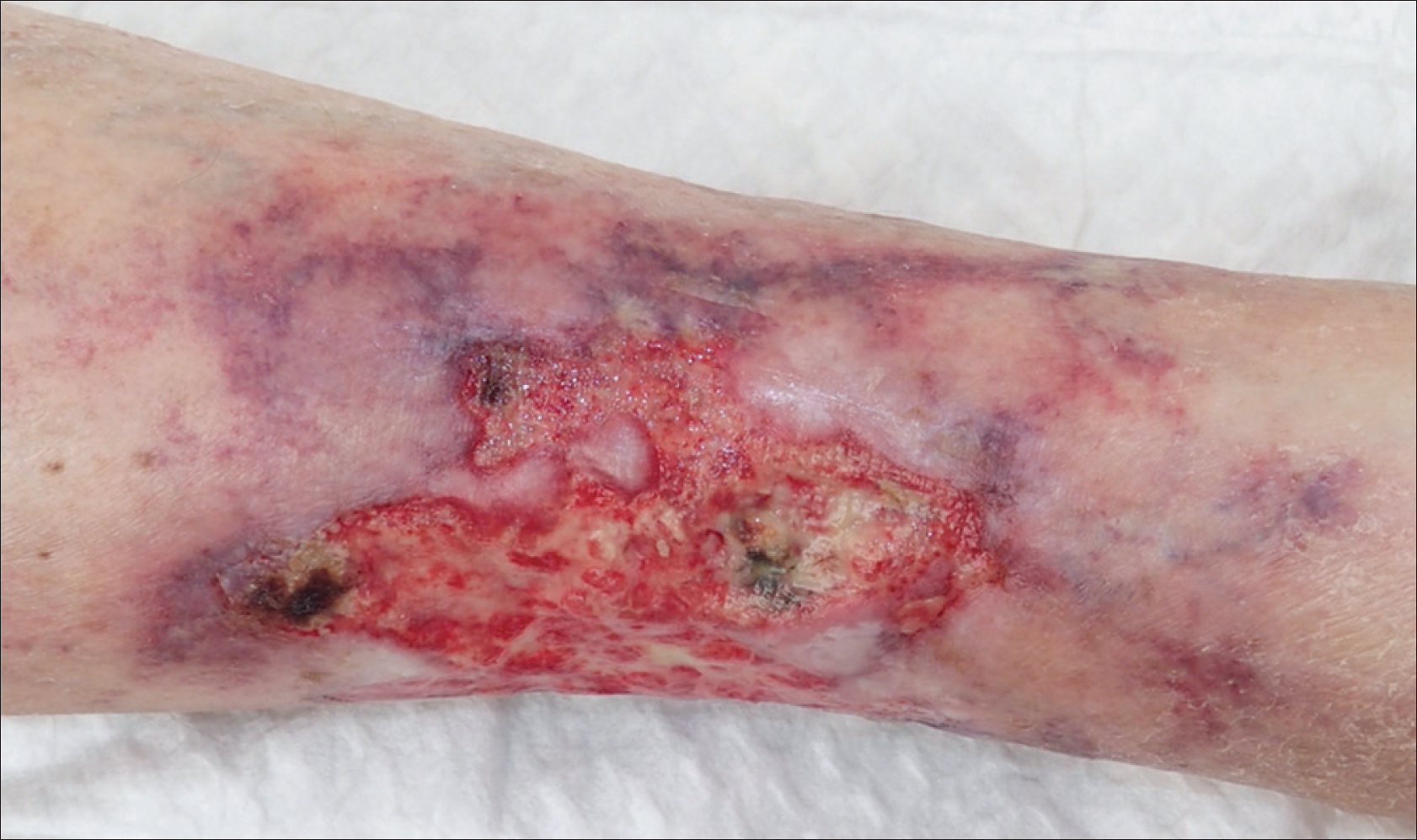
There is no diagnostic test for calciphylaxis . the diagnosis is a clinical one . The characteristics lesions are the ischemic skin lesion . The necrotic skin lesions typically appear as violaceous lesions and completely black leathery lesions . The suspected diagnosis can be supported by a skin biopsy , usually a punch of biopsy , which shows arterial calcification and occlusion in the absence of vasculitis . In certain patient an anti nuclear antibody test may play a role in diagonsis of calciphylaxis . Plain radiography and mammography may also show calcification but these tests are less sensitive . Laboratory studies , such as phosphate levels , calcium levels, and parathyroid levels , are nonspecific and unhelpful for diagnosis of calciphyaxis .
PROGNOSIS FOR CALCIPHYLAXIS :
The clinical prognosis for calciphylaxis is poor . The 1 - year mortality rate in patients who have end stage kidney disease is 45- 80 % . Median survival in patients who do not have ends - stage kidney disease is 4.2 months . Reponse to treatment is not guaranteed . The most common cause of death in calciphylaxis patients is sepsis , severe infection originating from a non - healing ulcer.


Comments
Post a Comment