What is the cure for rhinophyma ?
RHINOPHYMA :

Rosacea is a common, chronic inflammatory skin condition. It causes irregular redness or flushing of your face, particularly in the cheeks or nasal areas. Small, red bumps filled with pus, called pustules, may appear on your face as part of this condition. The subtypes can range from mild to severe. It isn’t unusual for individuals to have more than one subtype. Rhinophyma is classified as part of subtype 3 rosacea. It forms gradually over several years and is believed to be the result of poorly treated or untreated rosacea. The outcome is usually a large mass on the lower half of your nose.
WHAT ARE THE CAUSES AND RISK FACTORS OF RHINOPHYMA ?
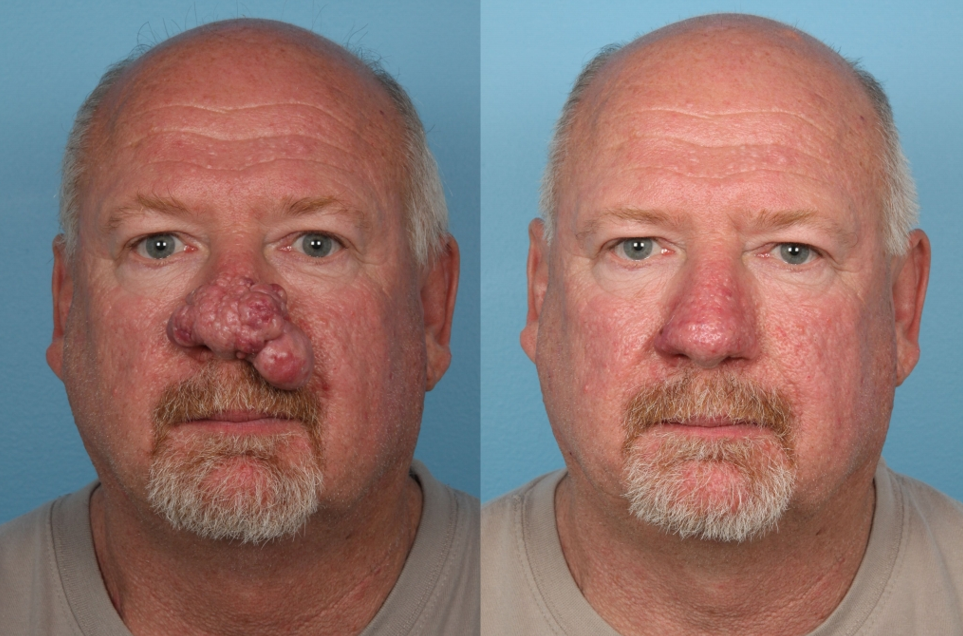
Rhinophyma involves an increase in sebaceous, or oil, glands and underlying connective tissues in the face. According to the exact cause is still unclear, and several factors may play a role. These include a combination of conditions that affect the immune system, nerves, and blood vessels. Rhinophyma occurs more often in males, at a ratio ranging from 5:1 to 30:1.
Some people believe that alcohol consumption may lead to the condition, but studies do not support this link. However, alcohol and caffeine can both temporarily dilate blood vessels, which seems to worsen rhinophyma.
Risk factors include gender and age. Rhinophyma occurs more often in men than in women. The condition gradually develops after the onset of the initial stages of rosacea, which typically happen between the ages of 25 and 50.
You’re at a higher risk for more severe rosacea and rhinophyma if you have:
- fair skin
- an Irish, English, Scottish, Scandinavian or Eastern European racial background
- a family history of rosacea
WHAT ARE THE SIGNS AND SYMPTOMS OF RHINOPHYMA ?
Rhinophyma usually occurs in more severe cases of rosacea. You may see some of the following symptoms in the less severe stages of rosacea or notice other subtypes that include:
- random facial flushing
- red, blotchy areas in the center of your face
- recurrent bumps and pimples, often mistaken for acne
- telangiectasia, which is a swelling of tiny blood vessels on your nose and cheeks
- very sensitive skin
- ocular rosacea, which is characterized by a burning or gritty feeling in your eyes, often along with conjunctivitis, characterized by redness and inflammation of your eye, and blepharitis, an inflammation or your eyelid
Symptoms can get worse as your rosacea progresses. More symptoms arise with the onset of rhinophyma. For example, the connective tissue and oil glands on your nose may increase. You also may notice the following changes to your nose:
- gradual growth into a swollen, bulbous shape
- numerous oil glands
- enlarged skin pores
- reddish skin tone
- thickening of the outer layers of skin
- waxy, rough, yellowish appearance
The symptoms of rhinophyma become worse if they’re left untreated. They also may occur in cycles.
HOW IS A RHINOPHYMA DIAGNOSIS ?
Earlier stages of rosacea can be confused with acne and other skin conditions. However, rhinophyma usually occurs after rosacea is identified.
Rhinophyma has unique characteristics. Your doctor typically can diagnose it without tests. They may be able to make a diagnosis by simply asking about your medical history and performing a physical exam. A skin biopsy may occasionally be required to confirm the diagnosis, especially in rare cases where the condition doesn’t respond to treatment.
HOW TO TREAT RHINOPHYMA ?
Rhinophyma can be treated with medicines or surgery. You and your doctor can decide which treatment option would be best for you.
Medication
Typically, once rhinophyma develops, it doesn’t respond well to medications. Medications may be successful in treating less severe cases and other subtypes of rosacea. These include:
- topical and oral antibiotics to reduce inflammation and redness, such as metronidazole, sulfacetamide, tetracycline, erythromycin (Erythrocin Stearate), and minocycline (Minocin)
- topical medications that help minimize inflammation, such as tretinoin (Retin-A) and azelaic acid (Azelex)
- oral capsules that prevent skin glands from producing oil, such as oral isotretinoin
Surgery
Surgery is the most common treatment of rhinophyma. Enlarged blood vessels and tissue overgrowth can cause disfigurement. This can be permanent if the affected area isn’t removed. Surgery is the preferred treatment for most cases. It’s considered the most effective option for long-term success.
The following surgical treatments and methods are commonly used to restore the appearance of your nose:
- surgery using a scalpel
- laser resurfacing with carbon dioxide laser
- cryosurgery, which uses extremely cold temperatures to freeze and remove abnormal tissue
- dermabrasion, which uses a small, rotating tool to take off the top layers of skin
Surgical treatment can:
- reshape a disfigured nose
- remove overgrowth of tissue
- minimize enlarged blood vessels
- improve cosmetic appearance
HOW TO PREVENT RHINOPHYMA ?There’s no known way to prevent rhinophyma. However, some factors can increase blood flow to the surface of your skin and aggravate rosacea symptoms. Experts recommend avoiding these potential triggers in order to limit flare-ups:
- hot foods and beverages
- spicy foods
- alcohol
- caffeine
- very hot or very cold temperatures
- exposure to sunlight
- emotional stress and anxiety
- strenuous exercise
Experts also recommend a healthy skin care routine for individuals with rosacea regardless of the subtype. This includes:
- regular sunscreen use with SPF 15 or higher and UVA/UVB protection
- sensitive skin or hypoallergenic skin moisturizer
- proper eye care when needed such as artificial tears and safe cleansing
Educating yourself and others about the cause of rosacea or rhinophyma may help remove social stigmas around the disorder. Support groups and networks can connect you with others who have rosacea. They may offer information about coping with the physical and emotional effects of the disorder. The NRS is the world’s largest support network for those with rosacea.
There’s no known way to prevent rhinophyma. However, some factors can increase blood flow to the surface of your skin and aggravate rosacea symptoms. Experts recommend avoiding these potential triggers in order to limit flare-ups:
- hot foods and beverages
- spicy foods
- alcohol
- caffeine
- very hot or very cold temperatures
- exposure to sunlight
- emotional stress and anxiety
- strenuous exercise
Experts also recommend a healthy skin care routine for individuals with rosacea regardless of the subtype. This includes:
- regular sunscreen use with SPF 15 or higher and UVA/UVB protection
- sensitive skin or hypoallergenic skin moisturizer
- proper eye care when needed such as artificial tears and safe cleansing
Educating yourself and others about the cause of rosacea or rhinophyma may help remove social stigmas around the disorder. Support groups and networks can connect you with others who have rosacea. They may offer information about coping with the physical and emotional effects of the disorder. The NRS is the world’s largest support network for those with rosacea.


Comments
Post a Comment