What is the cure for Pseudoxanthoma elasticum ?
PSEUDOXANTHOMA ELASTICUM :
Pseudoxanthoma elasticum (PXE) refers to a group of rare inherited disorders that affect the elastic of the skin, eyes, and .
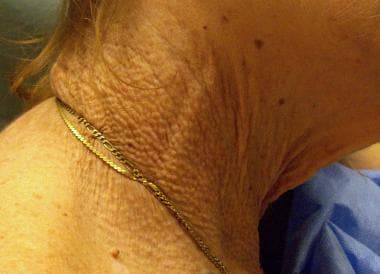
PXE, alternatively called Gronblad-Strandberg , was first described in 1881 and occurs when abnormal and mineralization of in affected tissues occur. It is characterised by yellow and (which may mimic xanthomas), skin laxity, and that may incur vision loss at later stages.
WHAT ARE THE CAUSES OF PSEUDOXANTHOMA ELASTICUM ?
PXE is caused by inactivating in a called ABCC6. The disease is , meaning both copies of the defective gene must be present for PXE to occur. Over 300 variants have been identified. Two common variants account for half of all cases of PXE.
PXE involves of calcium and phosphorus on elastic fibres. Deposits accumulate in -rich tissue such as the of the skin, Bruch’s membrane of the choroid, and tunica media/intima of . Elastic fibres eventually become fragmented.
The of PXE is currently understood to be due to metabolic derangement. ABCC6 encodes an ATP- efflux transporter that excretes inorganic phosphate (PPi), a strong of mineralization. Research has shown that decreased levels of PPi in the blood due to loss-of-function mutations of ABCC6 likely drive abnormal calcification in PXE.
HOW IS PSEUDOXANTHOMA ELASTICUM DIAGNOSED ?
PXE may be diagnosed from its characteristic skin findings; confirmation is often useful. Ophthalmologists may perform a fundoscopy to diagnose pathognomonic ocular features. may be utilised in the diagnosis of PXE. Different staining techniques are used to reveal calcium deposits, shortened and fragmented elastic fibres, and deformation of fibres.

testing for ABCC6 mutation or compound is the gold standard test for PXE. Over 90% of patients have detectable mutations. Genetic testing can also rule out PXE-like conditions.
WHAT ARE THE SIGNS AND SYMPTOMS OF PSEUDOXANTHOMA ELASTICUM ?

Pseudoxanthoma elasticum affects the skin first, often in childhood or early adolescence. Small, yellowish papular lesions form and cutaneous laxity mainly affect the neck, axillae (armpits), groin, and flexural creases (the inside parts of the elbows and knees). Skin may become lax and redundant. Many individuals have "oblique mental creases" (horizontal grooves of the chin).
PXE first affects the retina through a dimpling of the Bruch membrane (a thin membrane separating the blood vessel-rich layer from the pigmented layer of the retina), that is only visible during ophthalmologic examinations. This is called peau d'orange (a French term meaning "skin of the orange"). Eventually the mineralization of the elastic fibers in the Bruch membrane create cracks called angioid streaks that radiate out from the optic nerve. Angioid streaks themselves do not cause distortion of vision, even if they cross into the foveal area. This symptom is present in almost all PXE patients and is usually noticed a few years after the onset of cutaneous lesions. These cracks may allow small blood vessels that were originally held back by Bruch's membrane to penetrate the retina. These blood vessels sometimes leak, and these retinal hemorrhages may lead to the loss of central vision. Vision loss is a major issue in many PXE patients.
PXE may affect the gastrointestinal and cardiovascular systems. Gastrointestinal bleeding is a rare symptom and usually involved bleeding from the stomach. In the circulatory system, intermittent claudication, a condition in which cramping pain in the leg is induced by exercise, is a prominent feature. At later stages, coronary artery disease may develop, leading to angina and myocardial infarction (heart attack). Cerebral ischemia in PXE is caused by small vessel occlusive disease.
WHAT IS THE TREATMENT FOR PSEUDOXANTHOMA ELASTICUM ?
The most important aspect of treatment is to ensure that complications from involvement are prevented or dealt with speedily by the appropriate specialist.
General measures
- Reduction of cardiovascular risk factors (quitting smoking, exercise, weight loss, etc).
- Regular follow-up with cardiologists or specialists as recommended.
- Regular eye exams.
Specific measures
There is no current treatment targeting the underlying disease process of PXE. However, treatments exist for various disease manifestations:
- Cosmetic surgery for skin laxity and lesions
- Intraocular vascular (VEGF) , such as bevacizumab for CNV
- Vascular surgery for peripheral artery disease.
The diagnostic criteria for PXE are the typical skin biopsy appearance and the presence of angioid streaks in the retina. Criteria were established by consensus of clinicians and researchers at the 2010 biennial research meeting of the PXE Research Consortium. and confirmed at the 2014 meeting .These consensus criteria state that definitive PXE is characterized by two pathogenic mutations in the ABCC6 or ocular findings – angioid streaks > 1 DD or peau d’orange in an individual <20 years of age together with skin findings:
- Characteristic pseudoxanthomatous papules and plaques on the neck or flexural creases.
- Diagnostic histopathological changes in lesional skin: Calcified elastic fibers in the mid and lower dermis, confirmed by positive calcium stain.
One of the most critical symptom of PXE is choroidal neovascularization which can lead to deterioration of central vision. Photodynamic therapy has been used as a treatment, but this has been replaced with endothelial growth factor (VEGF) inhibitors (such as bevacizumab, ranibizumab, and aflibercept) with efficacy similar to their use in treatment of age-related macular degeneration.
To limit cardiovascular symptoms, reduction of cardiovascular risk factors through lifestyle changes is recommended. Generally clinicians recommend avoidance of non-steroidal anti-inflammatory drugs (NSAIDS) that increase bleeding risk, such as aspirin, and ibuprofen to prevent eye and gastrointestinal bleeding.
Formerly, dietary restriction of calcium was tried with no benefit, and in fact accelerated mineralization in mice.There are a number of potential treatments that are currently being tested or have just undergone testing including magnesium, etidronate, PPi, and tissue-nonspecific alkaline phosphatase inhibitors.
Given that ABCC6 heterozygous mutations result in few symptoms of PXE, this disease is a candidate for gene therapy. Some initial proof-of-principle experiments have been done in mice that have relieved some of symptoms of PXE, but as with all gene therapy treatments, there are many hurdles that must be over come including insuring that the treatment will be long-lasting and reducing the risk of insertional mutagenesis and severe immune reactions


Comments
Post a Comment